Tree Service in Lakeland, GA
Lakeland sits on the edge of a 13,000-acre Carolina bay wetland. That one geographic fact drives almost everything about trees here — which species grow, how their roots sit in the ground, how they fail, and how long you wait for the power to come back after they take a line down. Lanier County is not Lowndes County with a different name on it.
Banks Lake Is Not Scenery — It Is Your Soil
Banks Lake National Wildlife Refuge starts at the western edge of town. Around it grow the trees that belong in standing water: pond cypress, bald cypress, blackgum and tupelo. Those species have spent a very long time evolving to hold on in saturated ground.
The trees people actually plant in Lakeland yards and along the streets are a different story. Water oak, laurel oak and pecan are all common here — and all three sit at the bottom of the University of Florida’s wind-resistance rankings for southern trees. Put a species that fails in wind on ground with a seasonal high water table, and you have the local pattern in one sentence.
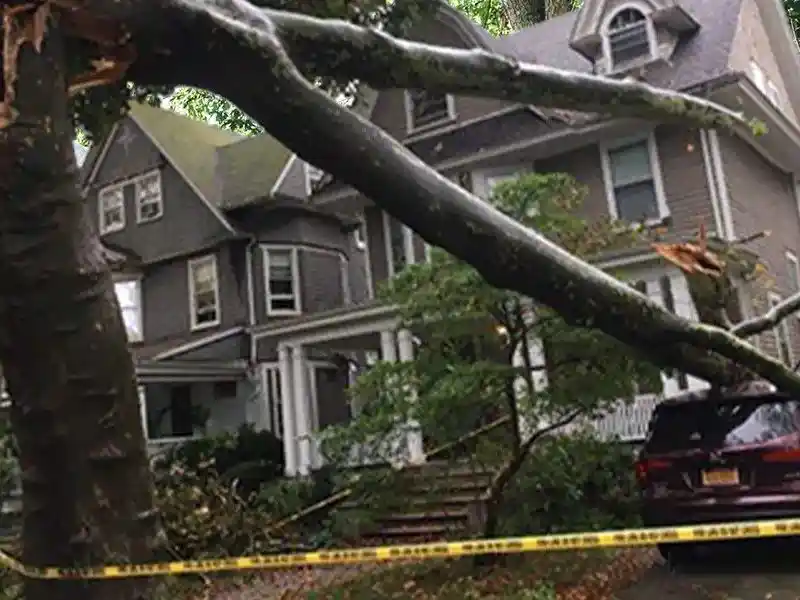
Saturated soil does not hold a root plate. When the ground is wet enough, friction between root and soil drops and the tree levers out whole — trunk intact, root plate standing vertical in the yard. That is the shape of most of what we clear here, and it is why a tree that stood through a dry-season storm can go over in a wetter one at lower wind speeds.
If your property is on the low side, backs onto wetland, or holds water after heavy rain, your trees are in a different risk category from the same species on a sand ridge. Worth saying on the phone when you call.
Rural Power Here Comes Back Slowly, and the Arithmetic Explains Why
Lakeland has no city electric utility — the city provides water and sewer only. Power comes from Georgia Power in and around town and Slash Pine EMC across the rural remainder.
Slash Pine is worth understanding if you live outside town. The co-op was founded in 1939 specifically to serve areas other utilities considered uneconomic, it is headquartered over in Homerville rather than in Lanier County, and it runs over 1,900 miles of line for roughly 6,000 members across eight counties. That works out to about 3.2 members per mile of line.
That number is the whole story. A suburban utility restores hundreds of homes by fixing one span. Out here, a crew can spend a morning on a single stretch of line and reconnect a handful of houses. Restoration runs in order — transmission, then substations, then distribution, then individual services — so rural properties are structurally last. It is not neglect; it is geometry.
What that means practically: after a big storm, clearing the tree off your drive so you can get out is often more urgent here than anywhere else we work, because the power is going to be a while regardless. Slash Pine also runs an active right-of-way clearing programme and notes that it is trees, not wind, that take their system down. And the weatherhead on your own house is customer-owned — that is an electrician’s job, not ours and not the co-op’s.
Helene Hit This County Hard, and Some People Twice
Hurricane Helene came through on 26–27 September 2024. In Lanier County, 911 stopped working and calls had to be routed to Berrien County. Cell service was down for most residents. Local reporting in the days afterward captured what that felt like — one Lakeland resident describing the big trees down as the main problem, another saying she called 911 a hundred times and only got a busy signal, and how in the middle of the night you cannot see anything, you can only hear it.
One Lakeland man lost his home to a tree during Idalia in 2023, and was hit again by Helene in 2024. Thirteen months apart, same household.
The theme that came through most clearly from residents afterwards was about being a small county — that help reaches the bigger places first and Lanier waits. That is worth naming honestly rather than pretending otherwise. It is also why we do not treat Lakeland as an afterthought run when the Valdosta calls dry up.
Tornadoes Here Are Documented, Not Folklore
Two National Weather Service–surveyed events matter for this area:
- 3 March 2012 — EF3. The track ran from near Moody Air Force Base into Lakeland, with peak winds estimated around 140 mph and the worst damage concentrated near Boyette Road and Highway 122.
- 8 April 2020 — EF0. Touched down in Ray City with tree and structural damage, tracked east, and dissipated near Lakeland. The parent storm then produced straight-line wind damage across Lanier County from US-129 through parts of Lakeland toward the Clinch County line.
The Lanier County hazard mitigation plan puts the tornado recurrence interval at roughly once every fourteen years, and tropical systems at closer to once every seven and a half. Trees here get tested more often than people assume.
Small Town, Small Lots, Big Acreage Around It
Lakeland city is a little under 3,000 people in under a thousand households, ringed by rural Lanier County — one of Georgia’s smallest counties by land area, with about fifty people per square mile.
In town, lots are small: the land development code sets residential minimums as low as 10,000 and 7,000 square feet. Step outside and listings run one and a half, three, five and ten acres. So the work splits sharply — tight-access removals between close-set houses on Oak Street or Pecan Street, and open-ground work on multi-acre tracts along the county roads.
One thing we will say plainly: Lakeland is a price-sensitive market and a lot of the housing stock is modest. We are not going to pretend otherwise or dress up a quote. You get the range on the phone and the scope in writing.
What We Do in Lakeland
- Tree removal — including the water oaks and laurel oaks that fail early on wet ground.
- Tree trimming and pruning — canopy reduction on top-heavy species before storm season, clearance from roofs and lines.
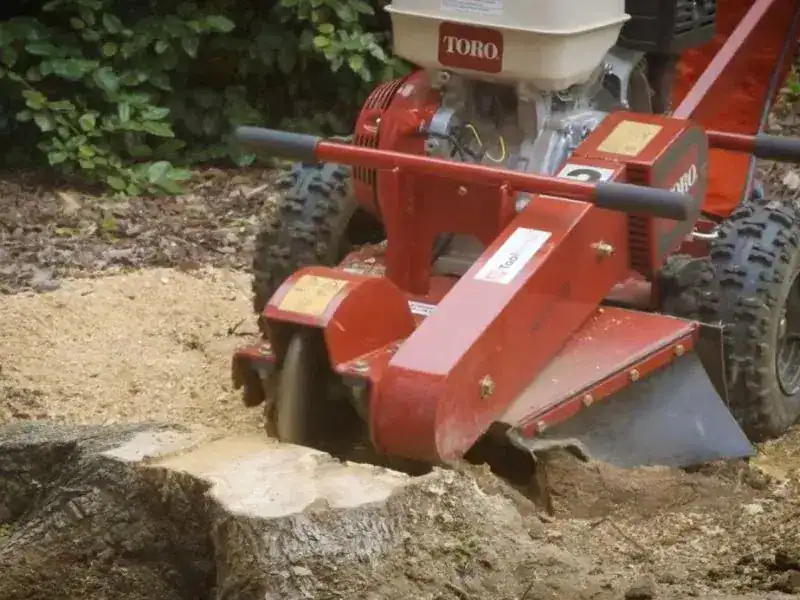
- Stump grinding — ground below grade, chips left or hauled, your choice.
- Storm cleanup — access first: drive, gate and door cleared before anything else.
- 24/7 emergency tree service — trees on homes, mobile homes and vehicles.
We also cover Hahira, Adel, Ray City, Naylor and the surrounding area. See our full service area.
Lakeland Tree Service FAQs
Do I need a permit to remove a tree in Lakeland?
For a tree on your own private residential property, no. We read the City of Lakeland Land Development Code adopted in June 2012 and it does not require a homeowner permit for tree removal — it addresses clearing only in the context of land disturbance and development. That is a genuine negative finding, not a guess. It changes if you are land clearing, working in a floodplain, or near jurisdictional wetland, which around Banks Lake and the Alapaha is a real possibility. In those cases confirm with Lakeland City Hall and Lanier County Planning and Zoning before anything starts.
Why do trees fall here at lower wind speeds than elsewhere?
Saturated soil. When the ground around the root plate is waterlogged, the friction holding roots in place drops sharply and the whole plate can lever out under wind that a tree on dry, well-drained ground would shrug off. Add that most yard trees here are species with poor wind resistance to begin with, and you get failures that surprise people.
Who do I call about a tree on the line?
Georgia Power in and around town, Slash Pine EMC on rural lines. Check your bill now so you know which. Report it before you call us and keep everyone well clear — we do not go near an energised line and neither should you.
How quickly can you get to Lakeland after a storm?
We prioritise access first — clearing the drive, the gate and the door so you can get in and out and so emergency services can reach you. Given how long rural power restoration takes here, getting mobile again is usually the more urgent problem.
Do you handle cypress?
Yes, though healthy cypress rarely needs removing — it is one of the few species genuinely suited to this ground. Most cypress calls turn out to be storm damage or a tree that has been undermined by changed drainage rather than a tree in decline.
Get a Straight Answer About Your Tree
Tell us where in Lanier County you are, what the tree is, whether the ground holds water, and what is underneath it. We will tell you what the job involves and when we can get there.